
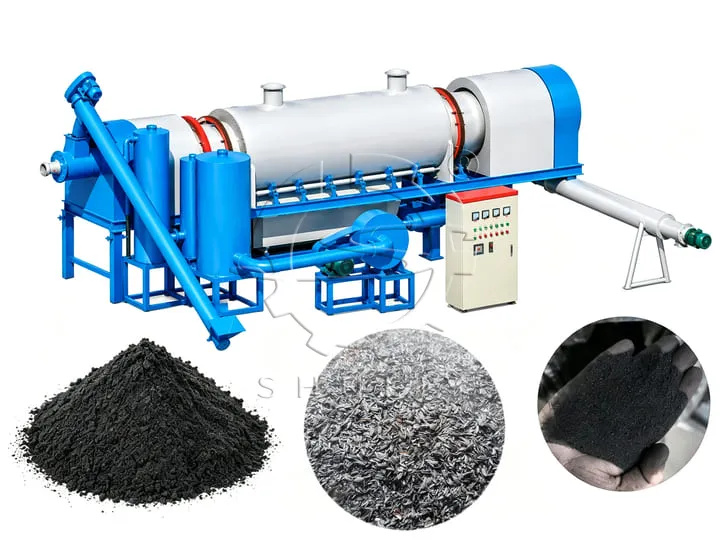
Continuous Carbonization Furnace for Biomass Charcoal Production
Looking for a continuous carbonization furnace for biomass charcoal production? Our furnace can continuously feed raw materials, carbonize…
Looking for a continuous carbonization furnace for biomass charcoal production? Our furnace can continuously feed raw materials, carbonize them, cool the finished charcoal, and discharge it into a storage hopper.
It is suitable for sawdust, coconut shells, palm shells, rice husks, branches, agricultural residues, and other biomass materials.
What Is a Continuous Carbonization Furnace?
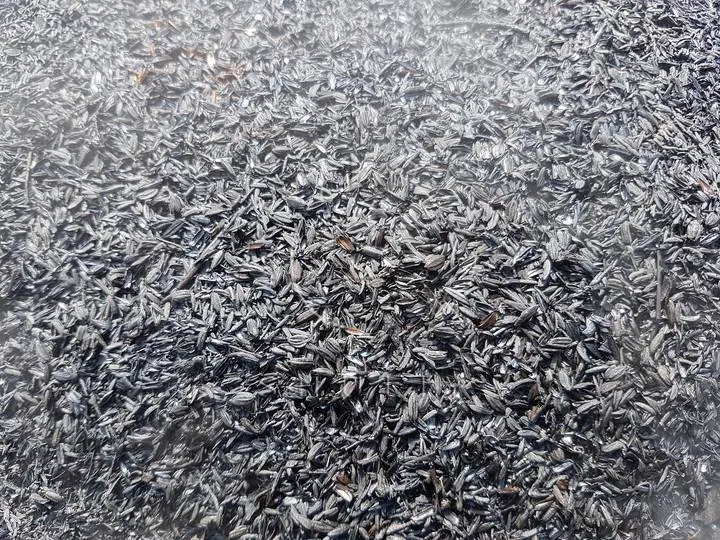
Our continuous charcoal carbonization furnace heats biomass materials in a controlled oxygen-limited environment to produce charcoal.
Unlike batch carbonization equipment, this furnace is designed for:
- Continuous feeding
- Continuous carbonization
- Continuous charcoal discharge
- Internal combustible gas recycling
- Automatic temperature and fan control
After initial heating, the furnace can use combustible gas generated during carbonization as a heat source.
What Raw Materials Can Be Carbonized?
The continuous carbonization furnace can process a wide range of biomass materials.
Agricultural residues:
- Cây ngô
- Sorghum stalks
- Sugarcane bagasse
- Cotton stalks
- Bean stalks
- Hemp stalks
- Dry leaves
Shells and husks:
- Vỏ dừa
- Palm shells
- Vỏ đậu phộng
- Rice husks
- Sunflower seed shells
- Apricot kernels/shells
Wood and processing residues:
- Mùn cưa
- Wood branches
- Bamboo waste
- Corn cobs
- Coffee grounds
- Distiller’s grains
- Herbal medicine residue
Some other biomass-containing waste materials can also be evaluated according to their actual composition.
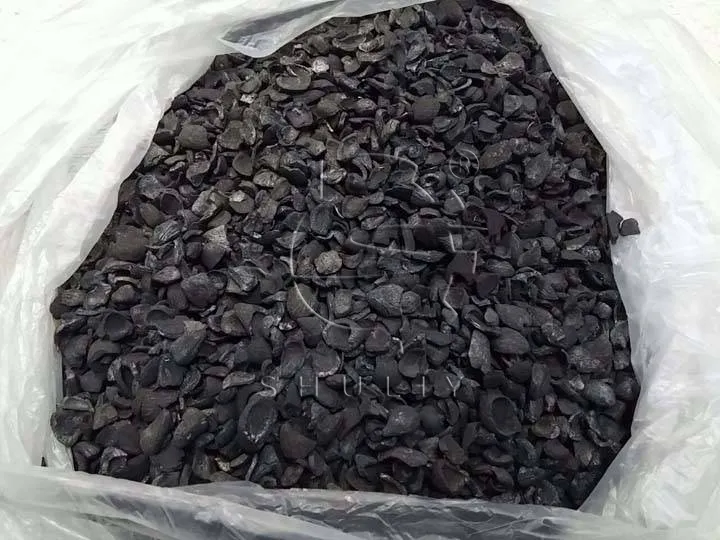
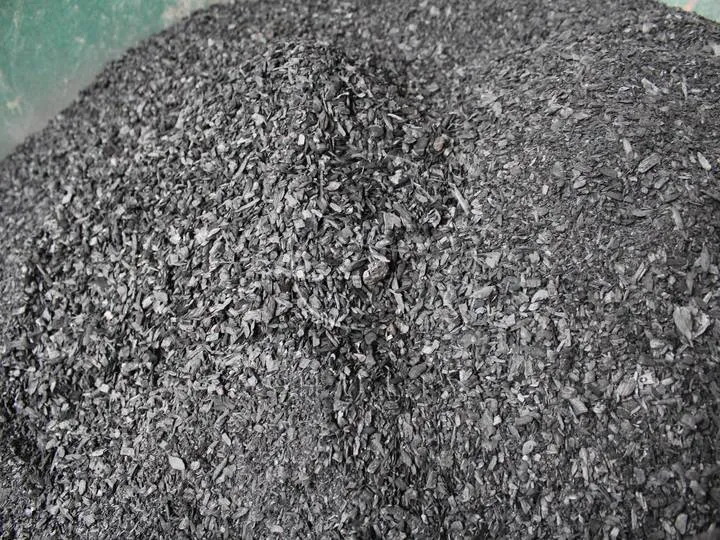
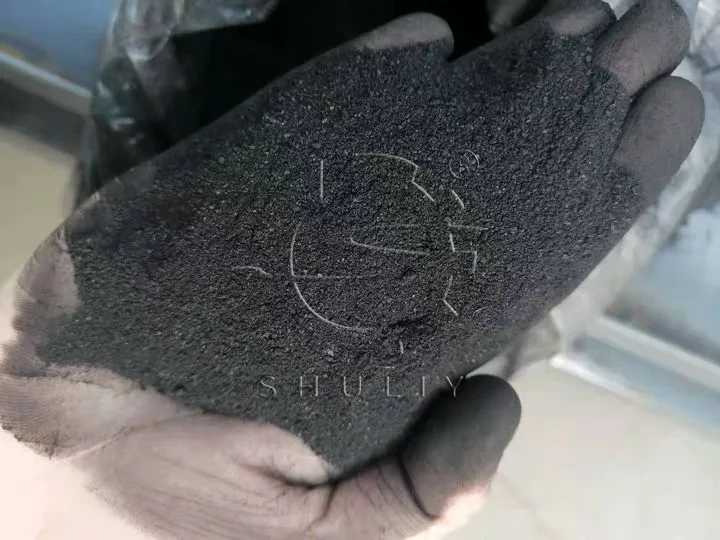
What Are the Raw Material Requirements?
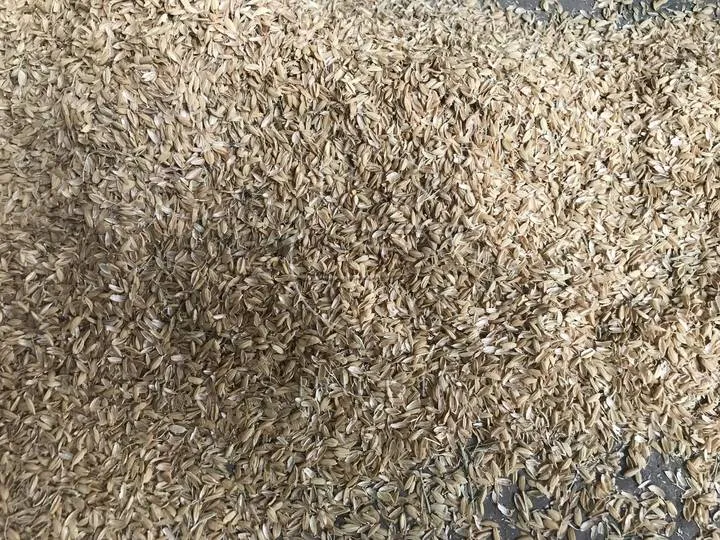
Before feeding the material into the furnace, pay attention to two main requirements:
| Mục | Requirement |
| Moisture | Below 20% |
| Feed size | Below 10 cm |
If the raw material contains too much moisture, a sawdust drying machine should be used before carbonization.
If the raw material is larger than 10 cm, we also provide a máy nghiền gỗ to crush it first.
How Does the Carbonization Process Work?
The working process is straightforward:
Gas preheating → Feeding → Drying → Carbonization → Gas recovery → Gas purification → Gas combustion → Continuous heating → Charcoal cooling → Discharge
Step 1: Preheat the Furnace
An LPG or natural gas gasification furnace is used for initial heating.
When the internal temperature reaches approximately 300–360°C, raw materials can start entering the carbonization furnace.
Step 2: Dry and Carbonize the Material
The material moves through the carbonization pipe.
It is gradually heated, dried, and carbonized as it moves forward.
When the material reaches the required temperature, pyrolysis starts and produces combustible gas.
Step 3: Reuse the Generated Gas
The generated gas is collected and passes through:
Spraying → Cooling → Purification & separation
The treated gas is then sent to the burner by a draft fan.
The burner burns the combustible gas and provides heat back to the carbonization furnace.
Once the generated gas can maintain the required temperature, the LPG or natural gas heating system can gradually stop.
Step 4: Continuous Charcoal Discharge
The furnace can then operate continuously:
Continuous feeding → Continuous carbonization → Continuous discharge
The finished charcoal enters a cooling screw conveyor and is cooled before being sent to the storage hopper.
Water cooling or spraying can also be used before storage to reduce the temperature of the charcoal.
Main Parts of the Carbonization System
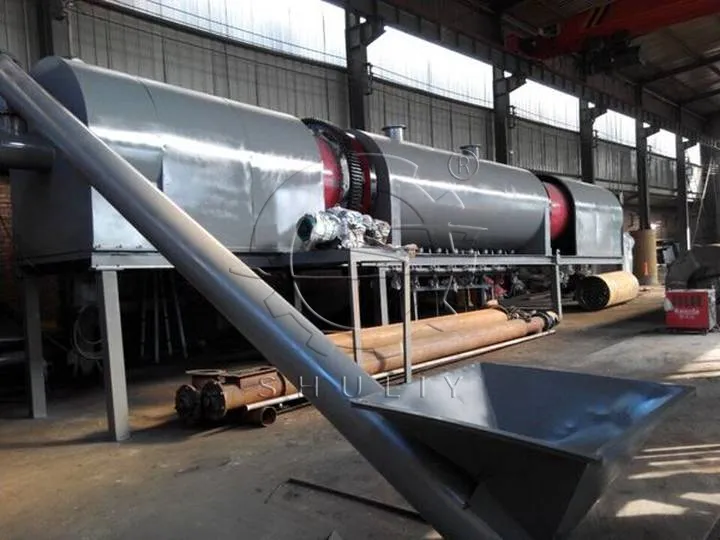
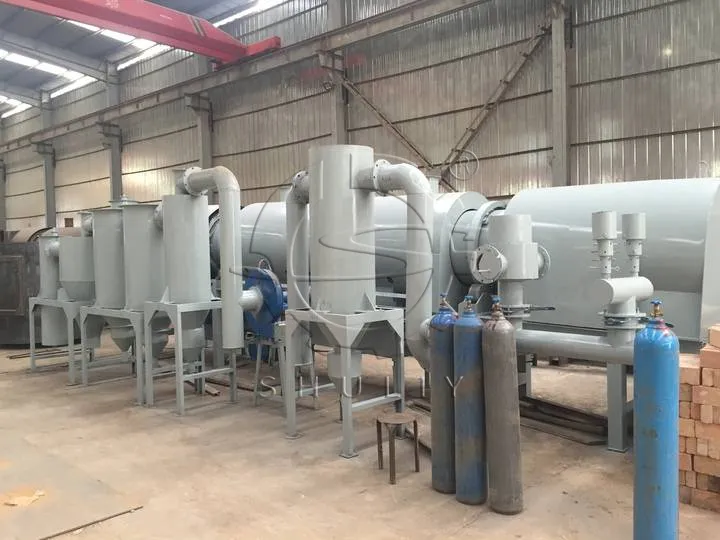
A complete continuous carbonization system mainly includes:
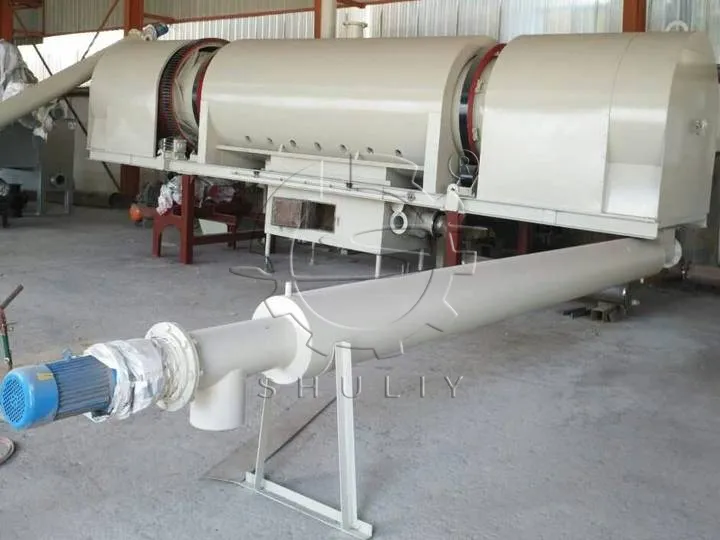
- Screw feeding conveyor
- Horizontal feeding section
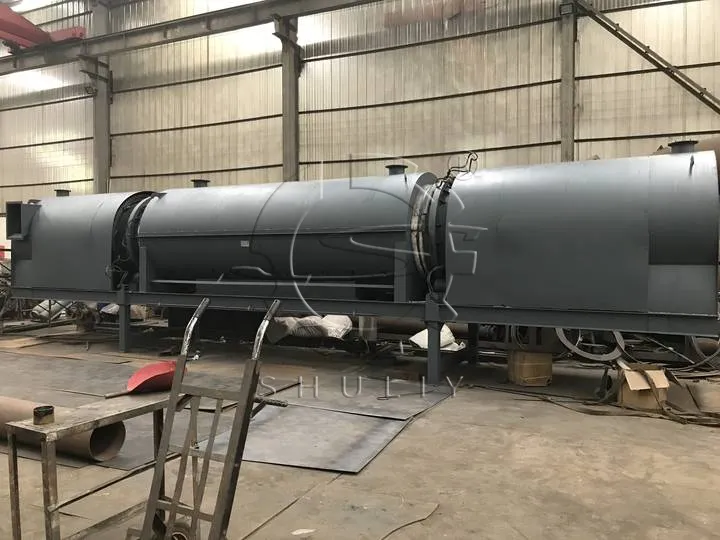
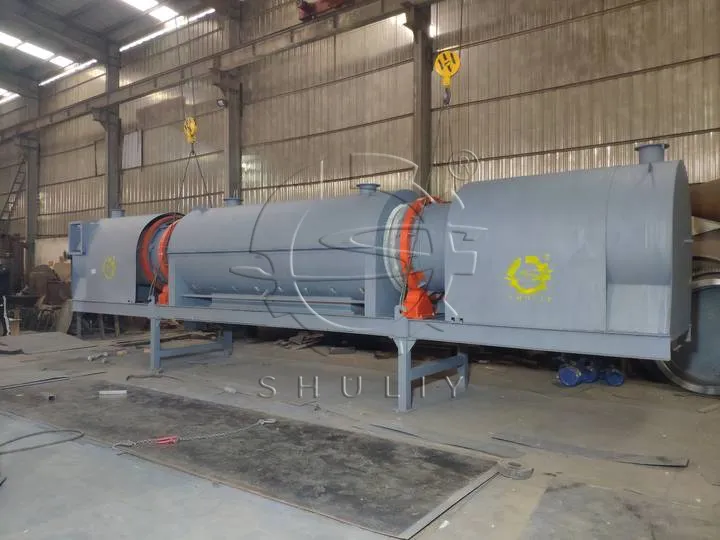
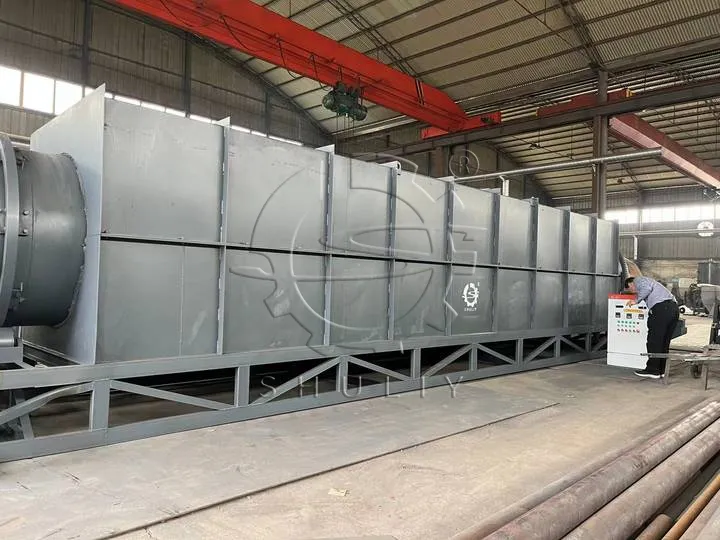
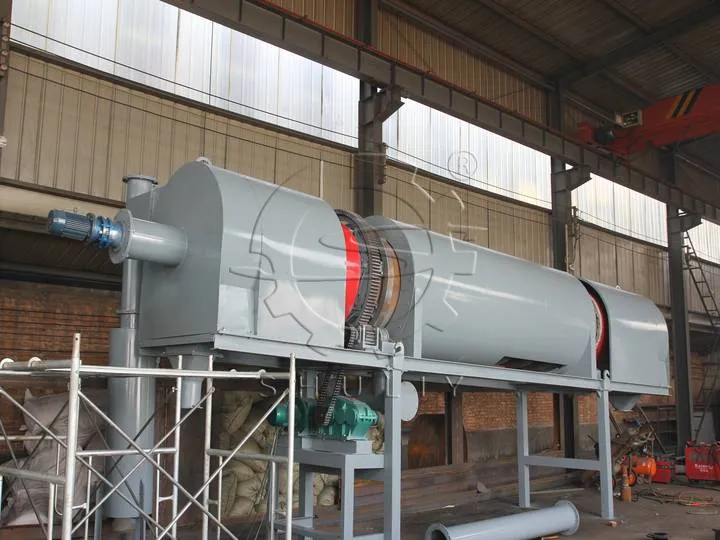
- Carbonization furnace
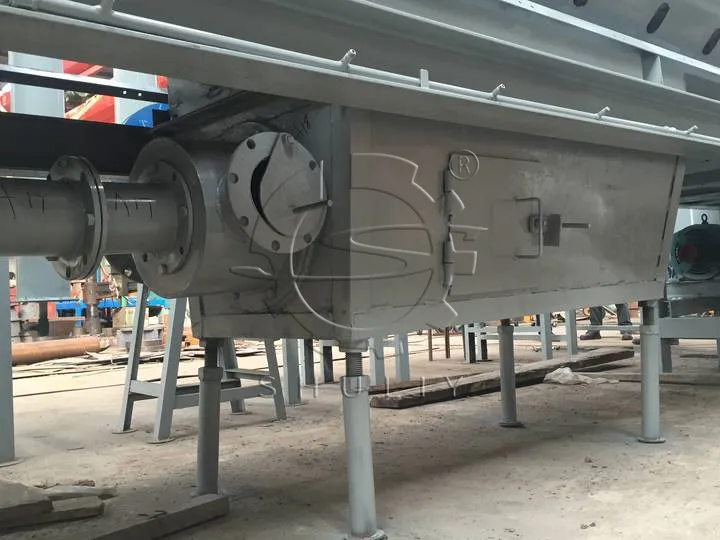
- Cooling and discharge screw
- Burner
- Combustion chamber
- Gas purification equipment
- Draft fan
- Electrical control cabinet
The 1200 model uses a combustion chamber of approximately 2.6 × 1.2 × 0.7 m.
The heating section of the main furnace is equipped with a 5 cm thick high-temperature rock wool insulation layer.
How Is the Carbonization Gas Handled?
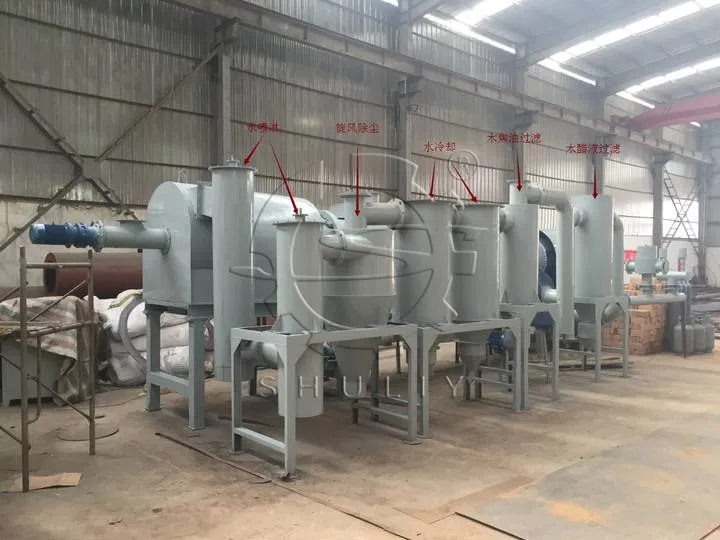
The carbonization process generates combustible gas, wood tar, and wood vinegar.
Our equipment uses a direct combustion system.
The generated combustible gas is recovered, treated, and sent back to the burner for combustion. The wood tar and combustible gas can also be burned through the combustion system instead of being directly discharged.
This design allows the generated gas to participate in the heating process while reducing the discharge of combustible by-products.
How Many Workers Are Needed?
One complete continuous carbonization furnace requires approximately 3 workers for operation.
The workers can handle:
- Raw material feeding
- Equipment monitoring
- Charcoal discharge and handling
The electrical control cabinet controls the main components of the system.
The furnace speed can be adjusted according to the raw material. Harder materials can be processed at a slower speed to increase carbonization time.
Continuous Carbonization Furnace Capacity
Different models are available for different output requirements.
| Người mẫu | Charcoal Output |
| 800 | 300–400 kg/h |
| 1000 | 800–1000 kg/h |
| 1200 | 1200–1500 kg/h |
Note: The capacity above refers to the carbonized charcoal output. Actual feeding capacity is approximately 20–30% higher and varies with the specific gravity and characteristics of the raw material.
What Makes Our Continuous Carbonization Furnace Different?
We have focused on several key parts of the carbonization system.
- Larger Combustion Chamber: Our combustion chamber is approximately three times larger than that of some other manufacturers’ equipment, providing a larger combustion space.
- Stainless Steel Burners: The burners are made of stainless steel for high-temperature operation.
- Automatic Electric Ignition: The system uses automatic electric ignition, while some conventional equipment requires manual ignition.
- Water-Cooled Stainless Steel Fan: The furnace uses a water-cooled stainless steel fan instead of a conventional fan. The fan also helps regulate the internal gas circulation and furnace temperature.
- 304 Stainless Steel Option: The main carbonization furnace can be customized with 304 stainless steel according to the customer’s requirements.
What Can the Charcoal Be Used For?
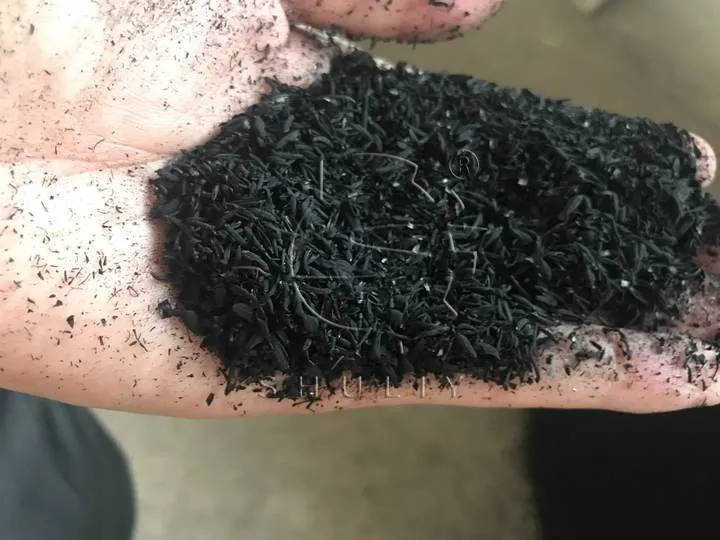
The charcoal discharged from the furnace can be directly used or further processed.
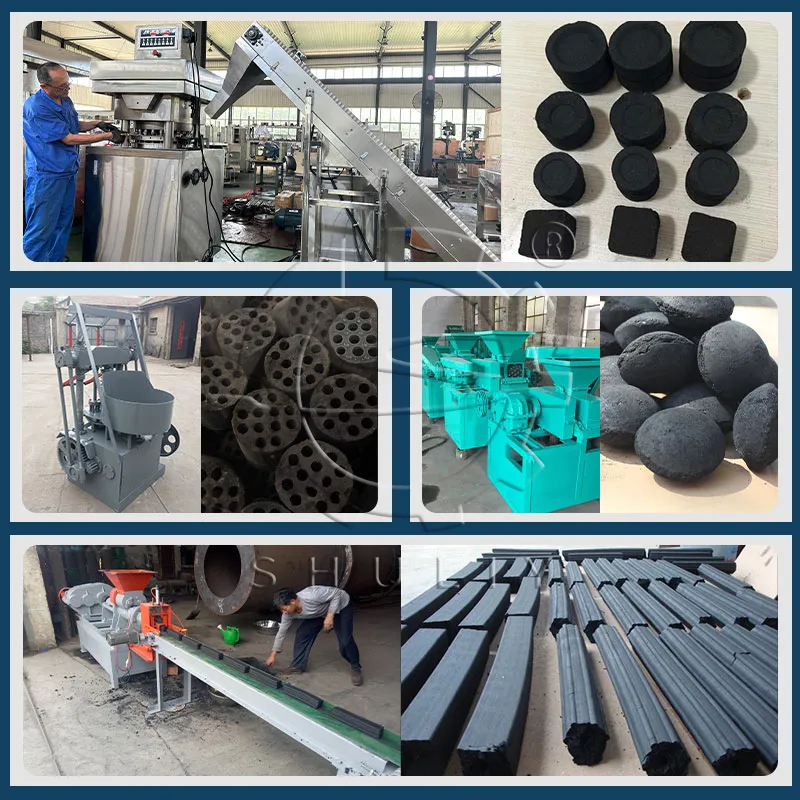
For charcoal production, the charcoal can first be ground into charcoal powder and then mixed with a suitable binder.
Different forming machines can produce different finished products.
| Equipment | Finished Product |
| Shisha charcoal machine | Square and round shisha charcoal |
| Honeycomb charcoal briquette machine | Honeycomb charcoal and charcoal briquettes |
| Charcoal briquette machine | Regular charcoal sticks |
| Charcoal ball press machine | Ball, square, and pillow-shaped briquettes |
Key Points to Consider for Our Continuous Carbonization Furnace
1. What Raw Materials Can Be Carbonized?
The continuous carbonization furnace can be used for various biomass materials, such as sawdust, wood chips, bamboo, rice husk, coconut shell, palm shell, and other agricultural waste. The suitable model depends on the type, size, moisture, and feeding characteristics of the raw material.
2. What Capacity Can It Achieve?
Production capacity is an important consideration when selecting a carbonization furnace. Different models can provide different capacities. We can recommend a suitable model according to the required charcoal output and raw material availability.
3. What Is the Quality of the Charcoal?
The carbonization temperature, residence time, and raw material characteristics all affect the final charcoal. By adjusting the operating conditions, the furnace can produce charcoal with the required carbonization degree and appearance for different applications.
4. What Fuel Does the Furnace Use?
The continuous carbonization furnace can use an external fuel source for startup and heating. After stable carbonization begins, the combustible biomass gas generated during the process can be collected and burned to provide heat, helping reduce the need for continuous external fuel input.
5. How Is Smoke Generated During Carbonization Handled?
Carbonization produces smoke and gases, so the equipment is equipped with a smoke collection and treatment system. Depending on the configuration, the system can include water spraying, cyclone dust removal, water cooling, tar filtration, and other treatment units. Combustible gas can also be collected and reused in the heating system.
6. Is the Carbonization Furnace Safe to Operate?
The continuous carbonization furnace is equipped with a control system, pipelines, valves, and other supporting components to manage the heating, gas flow, feeding, and carbonization process. Proper installation, operation, and regular maintenance are also important for safe and stable operation.
7. How Much Factory Space Is Required?
The required factory space depends on the furnace model, capacity, raw materials, and supporting equipment. We can plan the equipment layout according to the customer’s available factory space, including feeding, carbonization, cooling, gas treatment, and product storage areas.
8. What Can the Carbonized Product Be Used For?
The carbonized product can be sold as charcoal or further processed according to the customer’s requirements. For example, it can be crushed into charcoal powder and then made into BBQ charcoal, shisha charcoal, honeycomb charcoal, or other charcoal briquettes.
Build a Complete Charcoal Production Solution
If you want to produce finished charcoal products rather than only carbonized charcoal, we can combine the continuous carbonization furnace with charcoal grinding, mixing, and forming equipment.
The complete process can be:
Biomass → Carbonization → Charcoal → Grinding → Mixing → Briquetting → Finished Charcoal
Tell us your raw material, moisture, feed size, required output, and final charcoal product. We can recommend a suitable carbonization and charcoal production configuration.