
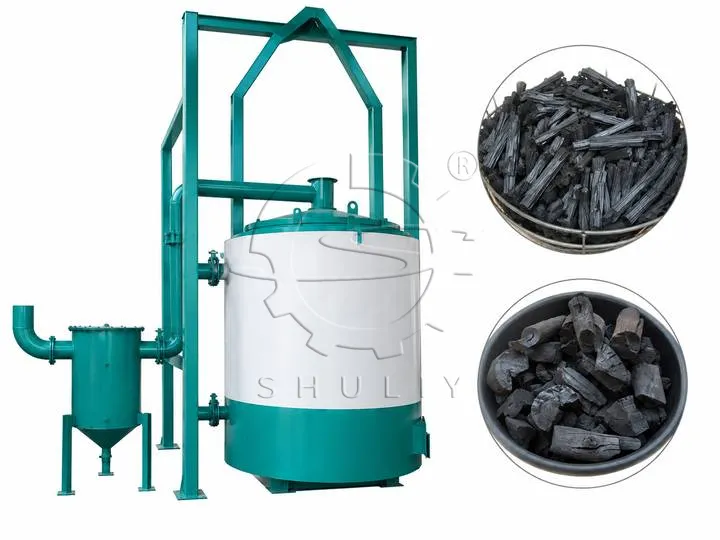
Hoist Carbonization Furnace for Efficient Biomass Charcoal Production
Hoist carbonization furnace is designed for customers who want to turn wood and other suitable biomass materials into…
Hoist carbonization furnace is designed for customers who want to turn wood and other suitable biomass materials into charcoal on a commercial scale. With a daily capacity of about 1–3 tons, this charcoal carbonization machine is suitable for charcoal production businesses using wood sticks, branches, wood scraps, bamboo, and similar materials.
The produced charcoal can be used as barbecue charcoal and fuel, or further processed into charcoal briquettes for applications such as shisha charcoal and other molded charcoal products. The lifting design makes loading and unloading easier, while the reusable gas generated during carbonization helps reduce the need for continuous fuel feeding.
What Is a Hoist Carbonization Furnace?
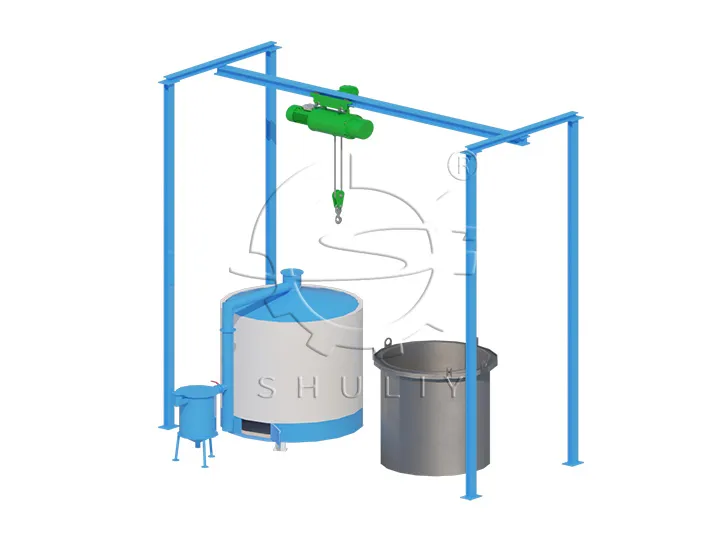
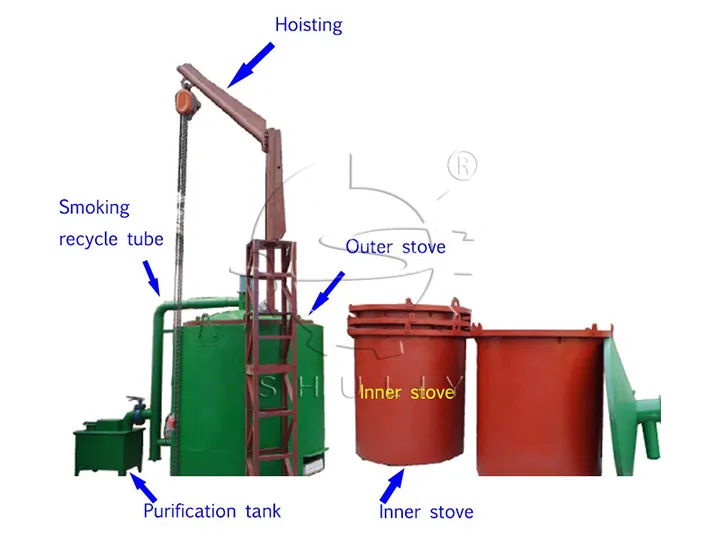
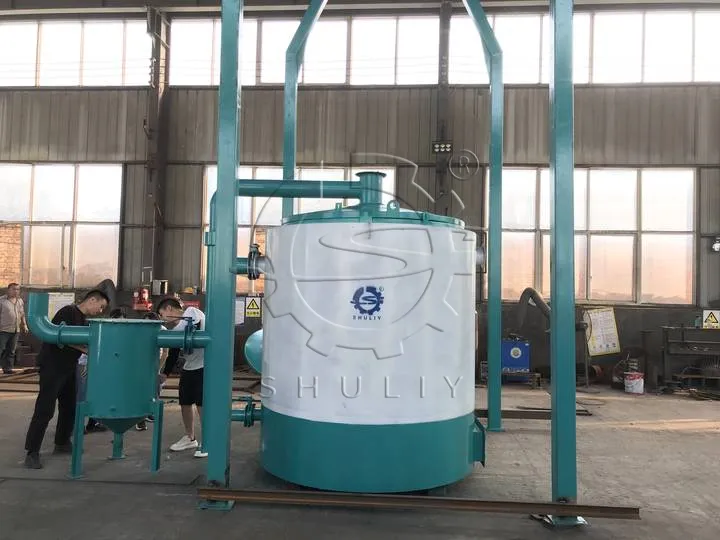
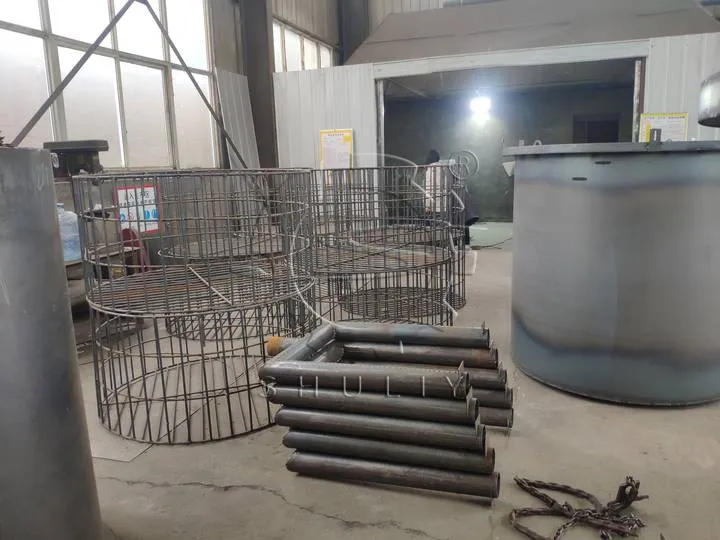
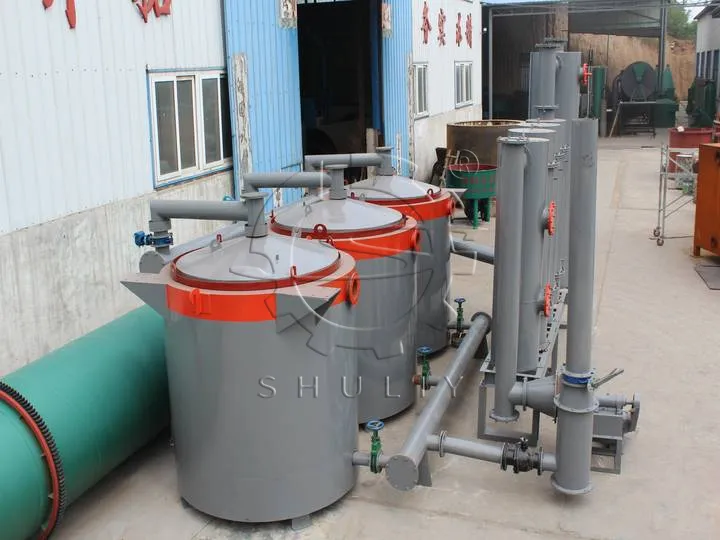
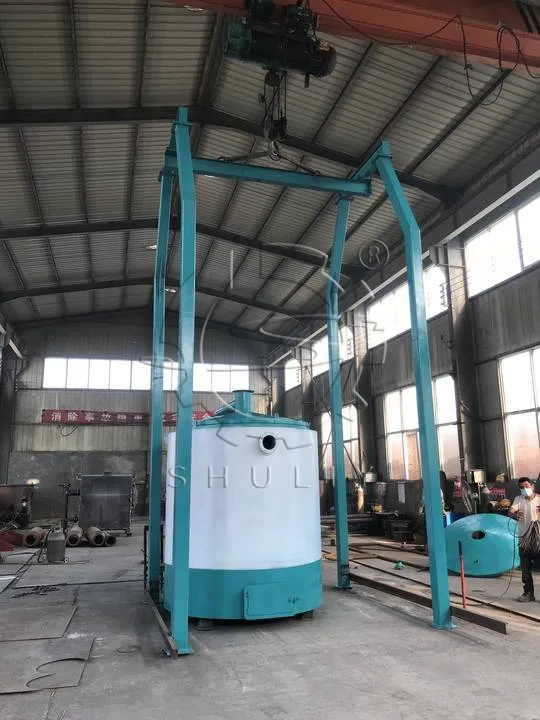
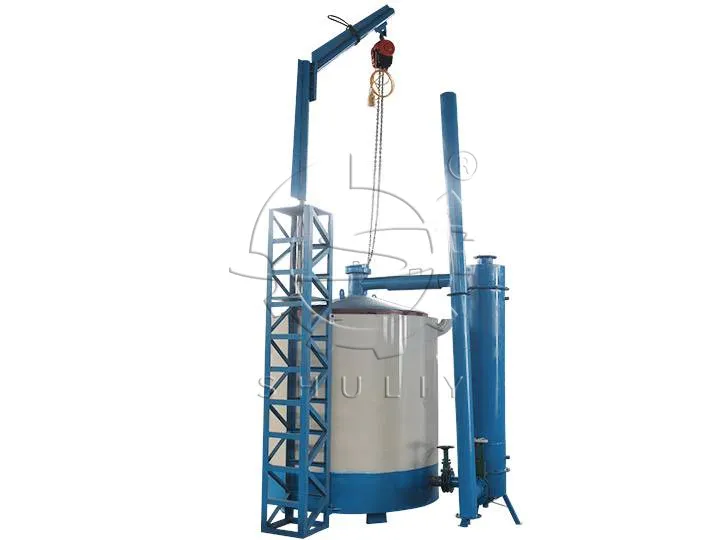
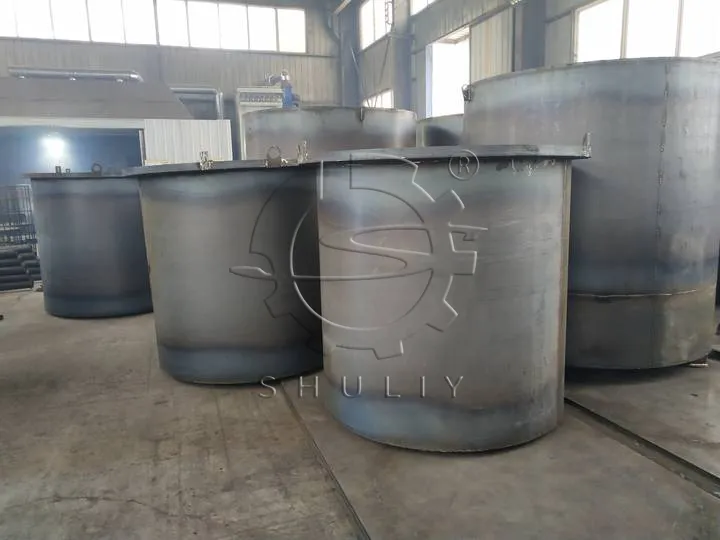
A hoist carbonization furnace is a vertical charcoal-making machine with a removable inner retort and a lifting system. Instead of manually moving the raw materials in and out of the furnace, the materials are loaded into the inner retort first. An automatic traveling crane then lifts the retort into the outer furnace.
Once carbonization is completed, the same crane can lift the retort out for cooling and unloading.
This design is particularly useful for customers who process a large amount of biomass and want to make charcoal in batches while keeping the operation relatively simple.
What Can You Make with This Carbonization Furnace?
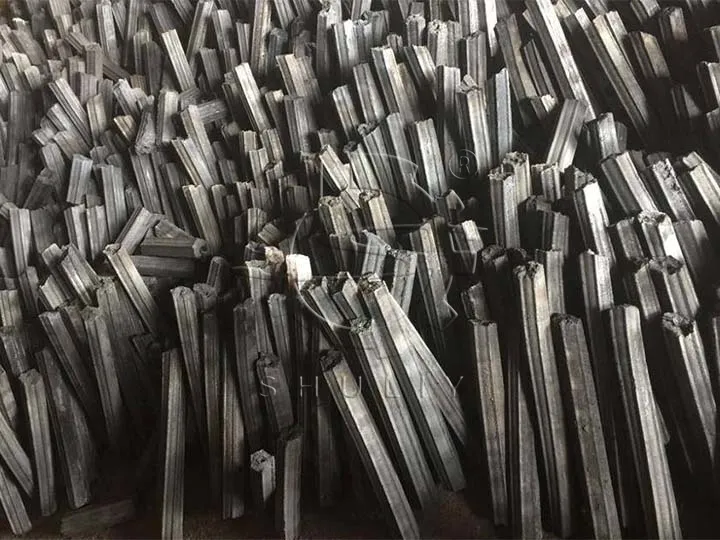
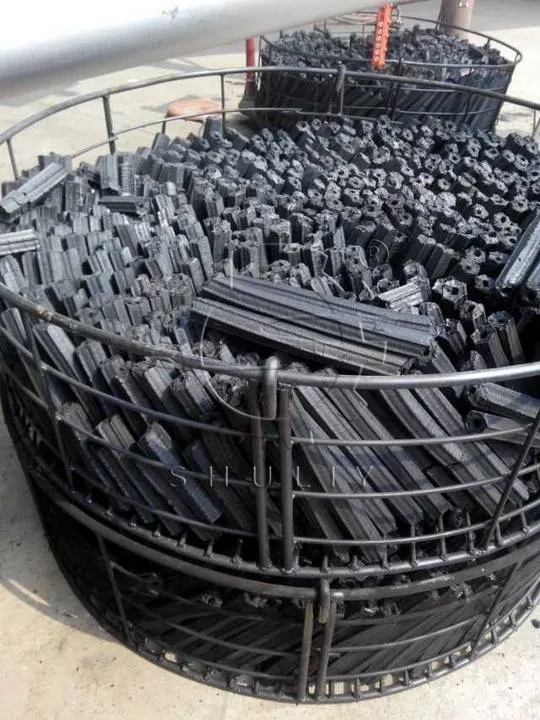
The main finished product is wood charcoal. Depending on the carbonization conditions and raw material, the charcoal can be produced with different densities, hardness, ignition characteristics, and burning times.
Typical applications include:
- Barbecue charcoal
- Heating fuel
- Biomass charcoal
- Charcoal for further briquetting
- Raw charcoal for shisha or hookah charcoal production
For customers producing molded charcoal, the carbonized material can be sent to a subsequent charcoal briquette production process.
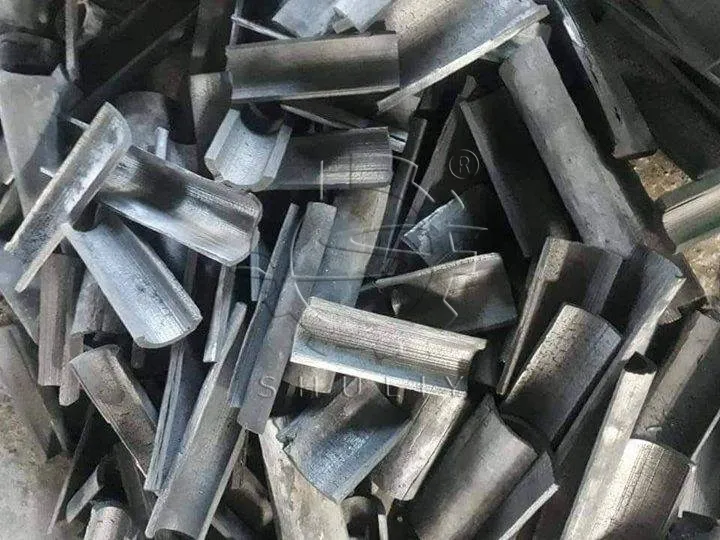
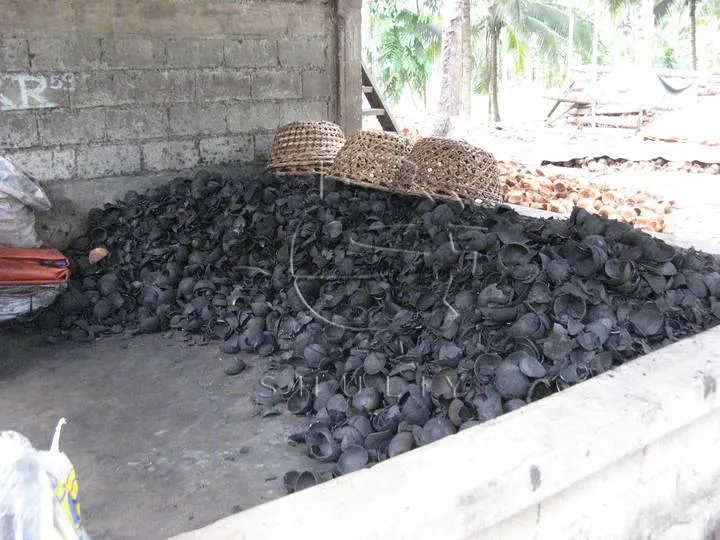
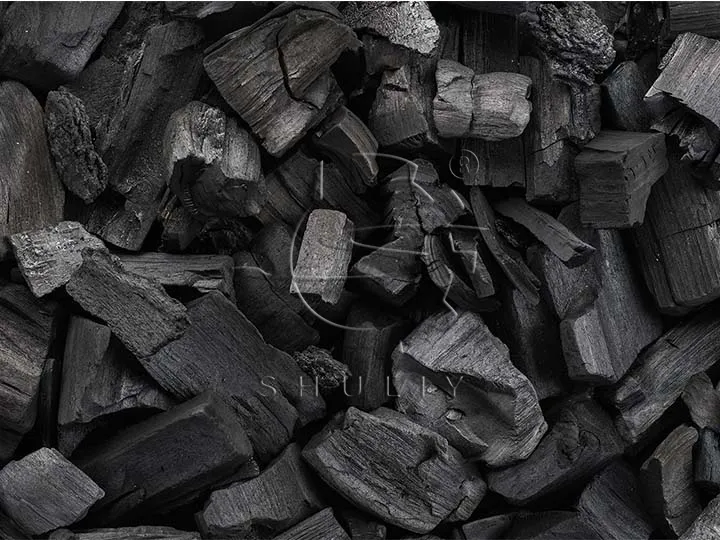
Suitable Raw Materials
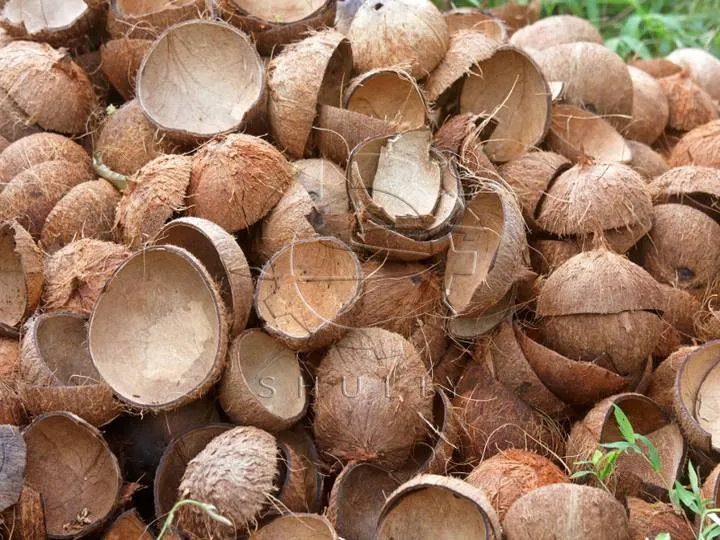
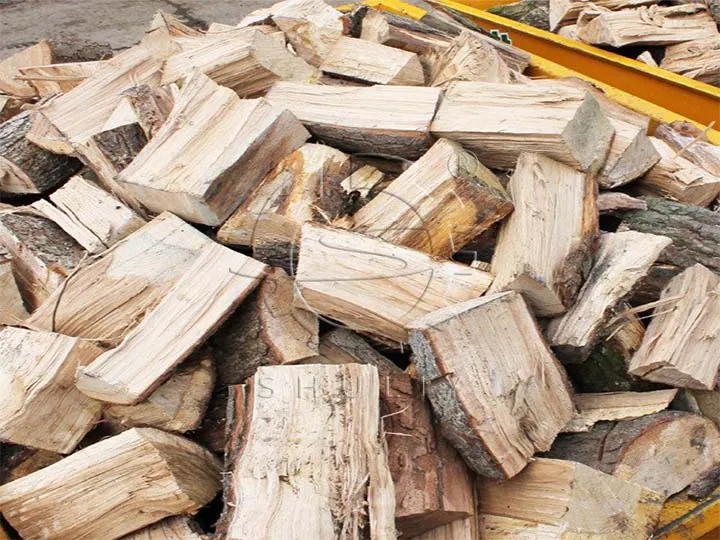
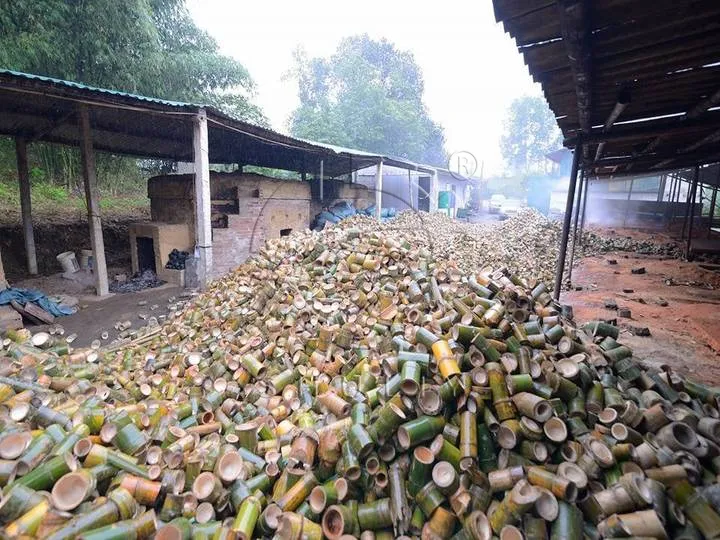
The furnace is mainly suitable for wood-based and other appropriate biomass materials, including:
- Wood briquettes
- Branches
- Logs
- Wood scraps
- Bambu
- Wood waste
- Other suitable biomass materials
The raw material should have a suitable size and moisture content for the carbonization process. If you are unsure whether your material can be processed, you can send us photos or information about the raw material for evaluation.
For materials such as olive pomace, direct carbonization in this furnace is generally not recommended. A more suitable process is to first use a sawdust briquetting machine to form the material and then carbonize the formed briquettes.
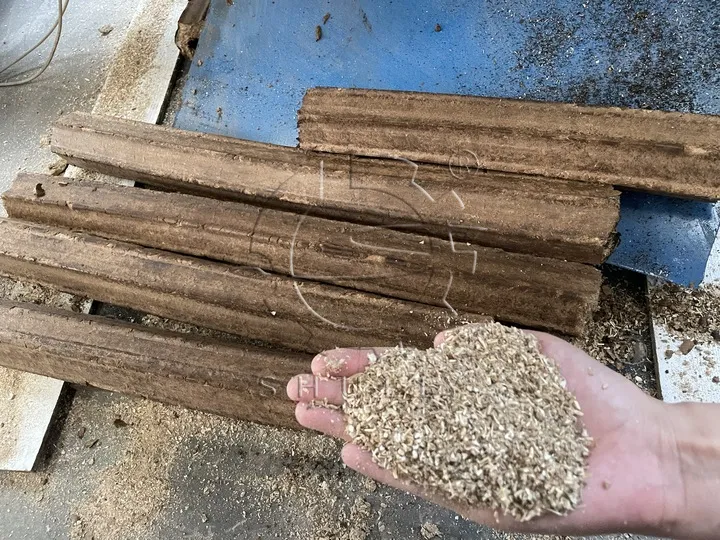
Advantages of the Hoist Carbonization Furnace
The hoist carbonization furnace offers efficient carbonization, flexible production, and convenient operation.
Energy Saving
Combustible gas generated during carbonization can be recycled and reused as a heat source, reducing additional fuel consumption.
Short Carbonization Time
Compared with traditional charcoal-making methods, the carbonization cycle is shorter. Depending on the raw material and model, one batch generally takes 6–16 hours.
For example, the SL-C1500 model can complete one carbonization cycle in approximately 6–8 hours.
Multiple Retorts for Higher Efficiency
Multiple inner stoves can work alternately. One retort can be carbonizing while another is cooling or being loaded, helping reduce waiting time.
Convenient Hoisting Operation
A traveling crane is used to lift and move the inner retorts, making loading and unloading easier and reducing manual work.
Configuração Flexível
The system can be configured with one, three, or more carbonization furnaces according to the customer’s production capacity requirements.
Suitable for Larger Charcoal Production
With flexible configurations and efficient operation, the hoist carbonization furnace is suitable for medium- and large-scale charcoal production.
Working Video of The Hoist Carbonization Furnace
How Does the Carbonization Process Work?
The furnace uses airflow carbonization, with hot air circulating inside the furnace to gradually heat the biomass.
At the beginning, waste wood or other suitable combustible materials can be burned at the bottom of the furnace to provide the initial heat. As the temperature rises, the moisture in the raw material is gradually removed.
When the temperature reaches around 230°C, combustible gases begin to form. As carbonization continues and the temperature reaches approximately 280°C, these gases can be recycled and used for combustion.
This means that after the furnace reaches stable operation, it does not need to continuously consume additional fuel. The combustible gas generated during the process can help maintain the required temperature.
The furnace temperature can reach up to approximately 500°C, depending on the raw material and operating conditions.
From Initial Heating to Self-Sustaining Carbonization
The carbonization process can be roughly understood in several stages.
- 90–150°C: The main focus is moisture removal. The heating intensity is controlled to gradually dry the raw material.
- Around 150°C: The moisture-removal stage continues, and the heating intensity can be increased as carbonization develops.
- Around 230°C: Combustible gases begin to be generated during carbonization.
- Around 280°C: The generated gases can be recycled for combustion, helping provide heat for continued carbonization.
The complete carbonization time is generally around 8–10 hours, while cooling usually takes another 8–10 hours or longer, depending on the material and operating conditions.
Automatic Lifting System Makes Loading Easier
One of the most practical features of this machine is the automatic traveling crane.
Before carbonization, the biomass is loaded into the inner retort. The crane then lifts the loaded retort and places it inside the outer furnace.
After carbonization, the retort is lifted out and moved to the cooling area.
The lifting system has a load capacity of more than 2 tons, providing enough capacity for moving the loaded retort safely.
This avoids the need to manually handle the raw materials inside the furnace and makes the whole production process more convenient.
Two Inner Retorts for More Efficient Production
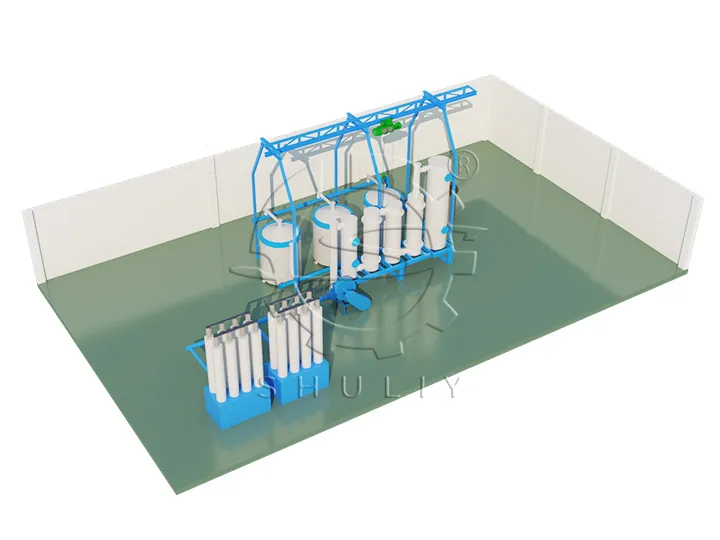
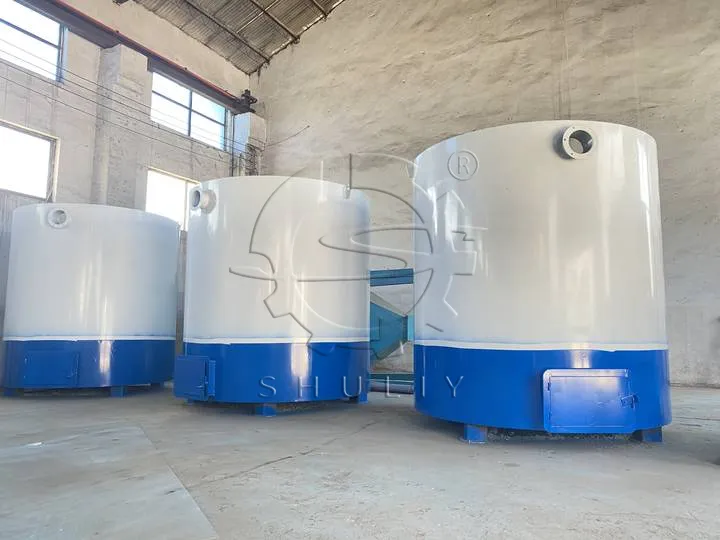
The carbonization system can be equipped with two inner retorts.
This allows customers to arrange the production process more efficiently. For example, while one retort is being cooled, the other can be prepared for the next carbonization cycle.
In this way, the outer furnace does not need to remain idle simply because the previous batch is cooling.
For customers who want to increase production efficiency, this alternating operation is one of the useful features of the hoist carbonization system.
Gas Circulation and Smoke Treatment
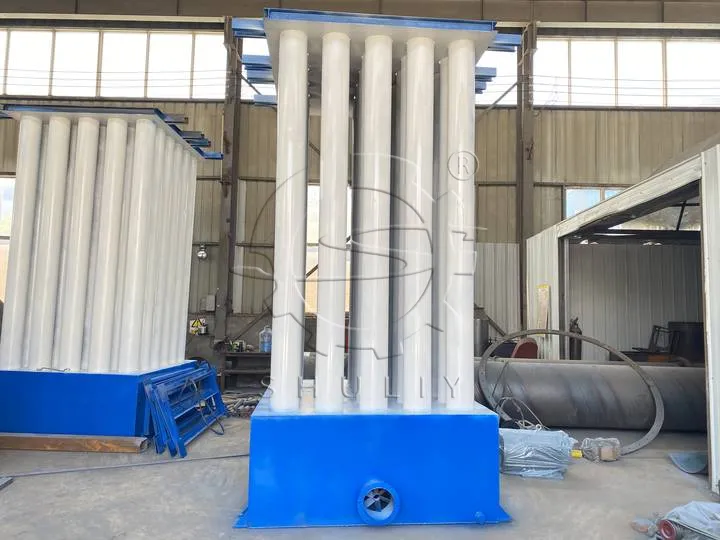
The pipeline system plays an important role in the carbonization process. It allows the generated gas to circulate and be reused for combustion.
At the same time, the machine can be equipped with a smoke purification system to reduce smoke emissions generated during carbonization.
For customers with stricter environmental requirements, a wood pellet burner can be selected as the external heat source instead of relying mainly on waste wood.
Hoist Carbonization Furnace Models and Specifications
The hoist carbonization furnace model is mainly named according to the diameter of the inner retort.
| Modelo | Inner Retort Diameter | Inner Retort Height | Inner Retort Thickness | Outer Furnace Thickness |
| 1000 | 1.0 m | 1.5 m | 8 mm | 6 mm |
| 1300 | 1.3 m | 1.5 m | 8 mm | 6 mm |
| 1500 | 1.5 m | 1.5 m | 8 mm | 6 mm |
The actual charcoal output depends on the type, density, moisture content, and loading volume of the raw materials.
Typical production capacities are:
| Charcoal Output | Carbonization Time |
| Approximately 300 kg | 4–6 hours |
| Approximately 600 kg | 6–8 hours |
| Approximately 1,000 kg | 8–10 hours |
Among these options, the 1,000 kg / 8–10 hours configuration is commonly recommended for customers requiring a larger production capacity.
After carbonization, the charcoal also requires approximately 8–10 hours or longer for cooling.
What Production Lines Can Use a Hoist Carbonization Furnace?
The hoist carbonization furnace can be used as a standalone machine for charcoal production or integrated into a complete charcoal production line.
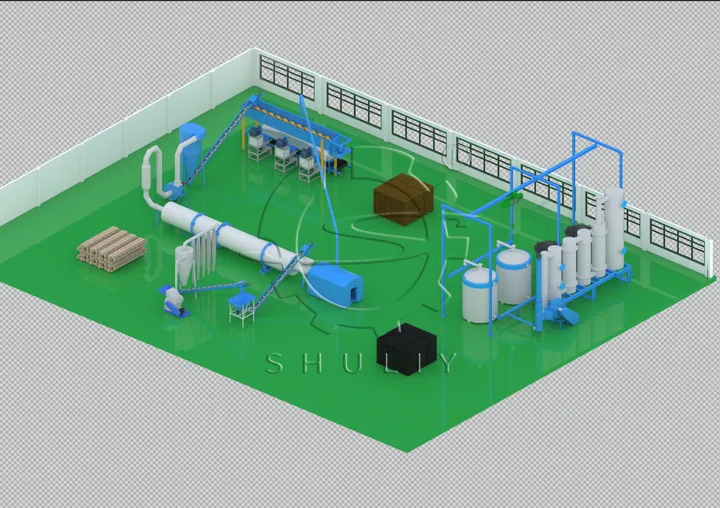
Sawdust Briquette Production Line + Carbonization Furnace
For powdery or fine biomass materials such as sawdust, straw, and olive pomace, the materials can first be crushed, dried, and formed.
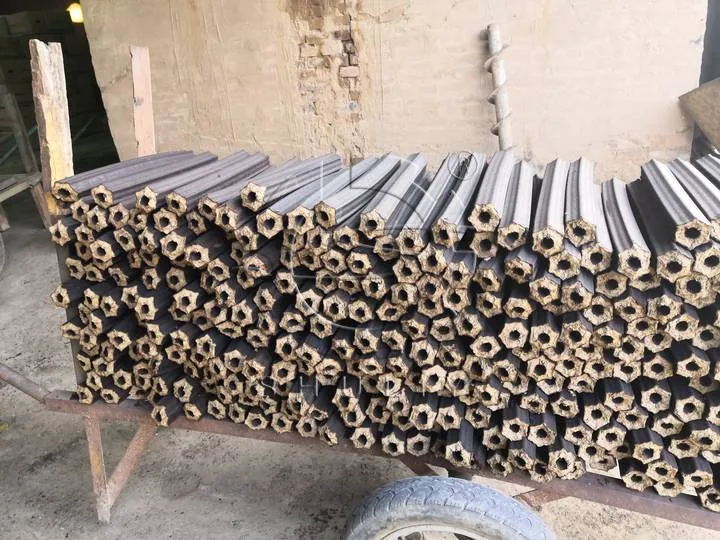
After processing through a biomass briquette machine, the formed biomass sticks are sent to the carbonization furnace to produce charcoal.
A typical process is:
Raw Material Preparation → Crushing → Drying → Briquette Making → Hoist Carbonization Furnace → Charcoal
This solution is suitable for powdery, granular, or other biomass materials that are difficult to carbonize directly.
Charcoal Briquette Production Line
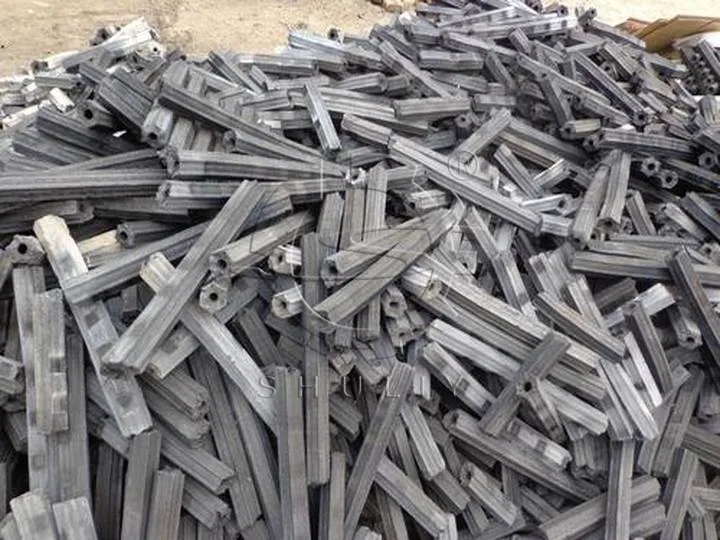
The charcoal produced by the carbonization furnace can also be further processed.
The charcoal is first crushed into a suitable particle size, then mixed with other required materials and pressed into different shapes.
A typical process is:
Charcoal → Crushing → Mixing → Briquetting → Drying → Finished Charcoal Briquettes
The final products can include:
- Hookah charcoal
- Barbecue charcoal
- Square charcoal briquettes
- Round charcoal briquettes
- Other molded charcoal products
We Also Provide Other Carbonization Equipment
Different raw materials and production capacities require different carbonization solutions.
In addition to the hoist carbonization furnace, we also provide:
- Continuous Carbonization Furnace
- Horizontal Carbonization Furnace
- Other types of biomass carbonization equipment
A continuous carbonization furnace is more suitable for projects requiring continuous feeding and continuous production. A horizontal carbonization furnace can be selected according to the shape of the raw materials and the preferred production method.
When recommending equipment, we do not simply focus on one machine. We consider the customer’s complete production requirements and provide a suitable solution.
Our recommendations can be based on:
- Raw material type
- Raw material size
- Moisture content
- Capacidade de produção necessária
- Final charcoal application
- Automation requirements
- Environmental requirements
- Available installation space and equipment configuration
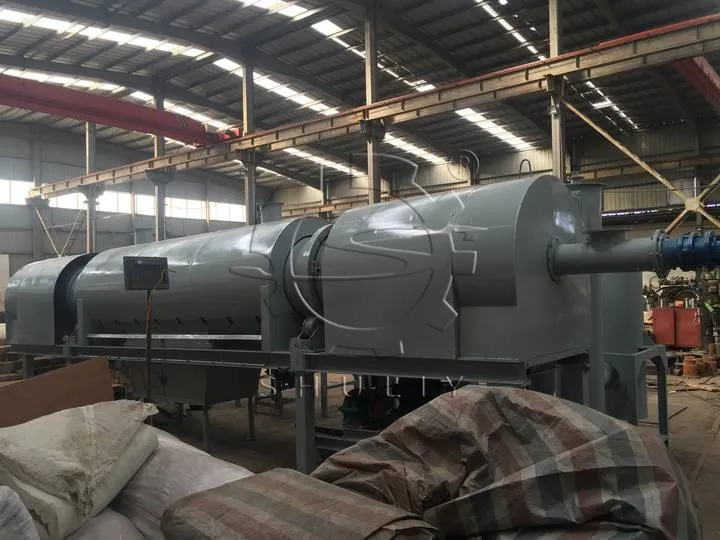
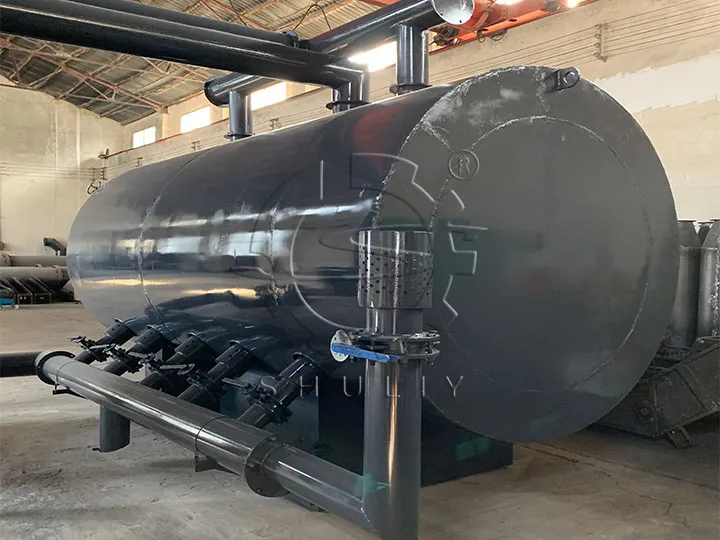
If the raw material is suitable for direct carbonization, we can recommend an appropriate carbonization furnace model. If the material needs to be formed first, we can also provide a complete biomass briquette production line + carbonization furnace solution.
Contact Us for a Suitable Carbonization Solution
If you are planning a charcoal production project, choosing a carbonization furnace based only on the machine name may not be enough.
Different raw materials, production capacities, and finished charcoal applications require different equipment configurations.
We can recommend a suitable hoist Carbonization Furnace, Continuous Carbonization Furnace, Horizontal Carbonization Furnace, or a complete Biomass Briquette Production Line + Carbonization Furnace solution based on your raw material type, material size, moisture content, required output, and final application.
Contact us to get a charcoal production solution tailored to your project.